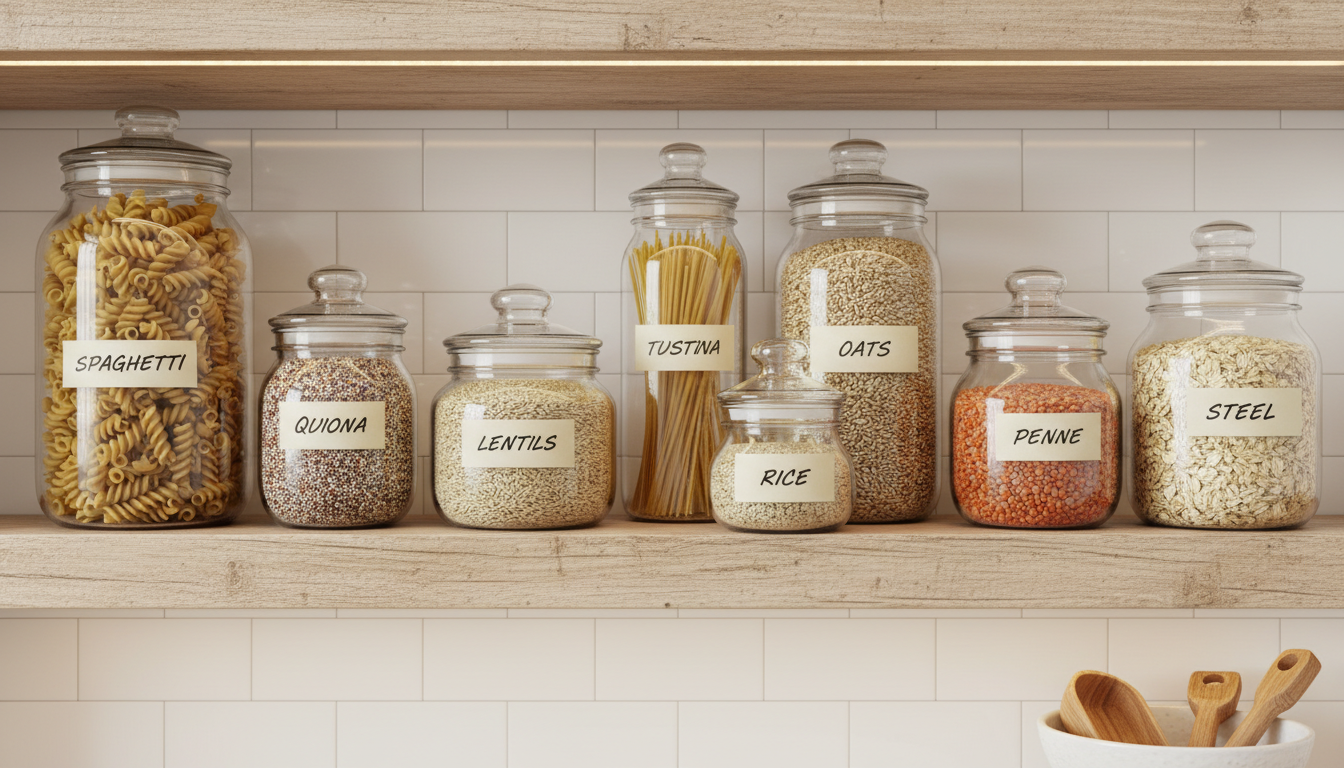
Rows of matching jars filled with pasta, rice, and flour look beautiful, yet decanting is more than a styling trend. Done thoughtfully, it keeps food fresher, reduces waste, and makes meal planning simpler.
The real benefits
Airtight containers protect against moisture and pantry pests, and clear sides let you see at a glance what is running low. Stackable shapes also use shelf space more efficiently than odd-sized packets.
What to decant
- Pasta, rice, grains, and dried beans.
- Flour and sugar, in larger containers with scoops.
- Cereal, nuts, and snacks in smaller airtight boxes.
What to leave alone
Items with cooking instructions or best-before dates are better kept in their original packaging, or the details should be copied onto the label. Tinned goods and spices in good jars do not need transferring.
Label clearly
Write the contents and the date purchased or the expiry date. Use waterproof labels or a chalk marker on jars that can be wiped and reused.
Finish with a clean routine
Wash and dry containers completely before refilling, and finish old stock before adding new. It is a small effort that rewards you every time you open the cupboard.
Leave a Reply